Although it has been quite a while since I've posted, and it seems like forever since my Internal Medicine rotation, I'm still going to try to fill in the blanks over the past year. I guess when I'm this far removed from the experience, I'll only remember the important stuff anyway.
Internal Medicine was a 3 month rotation, the longest of the year. My first month was my Parkland ward month, which is notorious for being the toughest. By the way, I learned recently that I've used the word notorious incorrectly in the past, using just as "well known," but Mark informed me recently that it is basically the same as "infamous." So, I'm using it now in it's correct context :) Internal Medicine is basically just adult medicine, and it covers a really wide range so it was a densely packed learning experience. People often ask me when I tell them I'm going into Pediatrics if I have a hard time seeing sick and suffering kids. Obviously, yes that can be difficult, but I had a harder time on Internal Medicine seeing a lot of people with disease processes that there wasn't much to be done about. During my Parkland month, we had a lot of chronic liver disease and cancer, two diseases that can have a pretty mean course. I was thankful for the opportunity to work with and learn from these patients, but I figured out pretty quickly that Internal Medicine was not going to be the path I would take.
My second month was at Baylor in Dallas, my first private hospital experience. It was a different world I stepped into, a world of insurance and discussions about what a patient could pay for based on their coverage, something I was not used to. On one hand, it was nice to know that many patients had good places to go when they left the hospital, and we didn't have to battle the "which transitional care/nursing facility will take this person who doesn't have funding" dilemma. On the other hand, there were a few times I saw, what I thought was, medicine practiced for financial gain. Meaning, patients staying in the hospital longer than necessary, or tests ordered that I had learned did not give much valuable information. It was a strange, unpleasant feeling to talk about how a patient needed to be transferred to Parkland because they weren't funded, or that they wouldn't be able to receive life-saving dialysis because they were Medicaid and they would need to get in line at Parkland for their treatments. It was not a setting I particularly enjoyed, and even though there are times I get frustrated with the crowded rooms or long wait times at Parkland, it made me thankful to learn medicine in a county hospital.
My last month was outpatient clinics which was really enjoyable. I am pretty sure I want to practice outpatient rather than inpatient medicine, or at least a combination of the two. I spent time in clinics specializing in Infectious Disease, Nephrology, Endocrinology, Cardiology, Gastroenterology, and general Medicine. Almost all of it was at the VA Hospital, which I grew to love. It was a great learning experience and pretty laid back, so a fun way to end a marathon of a rotation. After I finished the exam at the end of this block, I realized just how much I learned and how great a foundation those 3 months helped to build.
Wednesday, October 26, 2011

Monday, April 4, 2011
Santa Fe
Back in December, we took a trip with my family to Santa Fe. We really enjoyed a relaxing few days walking around the beautiful, quaint little area where we stayed. My family has always taken yearly family vacations which used to be in the summer, but since my brother and I have been out of the house and with different schedules, we started taking them over the holidays. No one had ever been to Santa Fe, and we were not disappointed!
We stayed close to "the plaza" where a lot of the little shops are. It had snowed the day before we arrived.




We stayed close to "the plaza" where a lot of the little shops are. It had snowed the day before we arrived.


My handsome man.


We loved this picture of my dad. Even though he looks kind of like he isn't enjoying himself, he really was :)

The outside of our hotel at night. It was so pretty with all of the luminaries lit up. The hotel restaurant also gave us decidedly the best meal of our lives.

My sweet mom.

One night on our way back to the hotel, we spotted this leather shop and had to try on their amazing hats. Everything was ridiculously expensive, but made for some fun pictures.


The church next to our hotel was so pretty. We went for the Sunday service.

This was the French Bakery that we actually ate at twice because it was so delicious and cute inside. The crepes were so good!

We went to this antique shop, and I had to stop and smile at their "medical section" which included items such as "brain duster tablets" and your general "healing ointments".


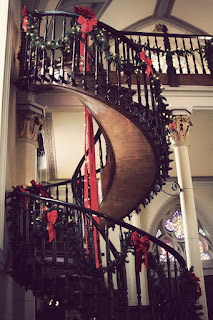
We visted the Loretto Chapel, home of "The Miraculous Staircase." The legend is that the chapel was built without adequate space for a staircase up to the choir loft, so the nuns prayed and a man showed up, built this amazing staircase, and then no one could ever find him again or has a record of who he was. The architecture is actually a mystery, because there is no center beam to hold it up. It is only held together with these wooden pegs between the steps. Pretty interesting to see!

On our last day, we visited the town of Chimayo, which was straight out of the movie "Nacho Libre." It had a very Mexican feel to it, complete with a beautiful and interesting little chapel that Mark had to duck his head to walk into.


It was such a fun trip! Can't wait to figure out where we'll go next Christmas!

Wednesday, February 9, 2011
Fort Worth
Over Christmas break, Mark and I decided to take a little mini-trip to Fort Worth. I've lived in Dallas all my life, but never really spent much time in Fort Worth, and we had so much fun! I knew we were in for a fun 2 days when we stumbled on this little gem down the street from our hotel...

 Yep, that's a dog, a cat, and a rat. Best friends. The owner said they've been together for 10 years. The dog and cat are attached by a leash thing, and the rat just walked around them. It was hilarious, and adorable, and a little strange. Definitely an interesting sight!


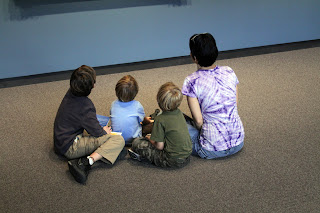
At the Amon Carter, we walked upstairs and saw this cute little family. Then, we realized how strikingly similar the mom looked to Mark's sister, Brittany! Other than speaking with a French accent and having three boys instead of 2 girls and a boy, she could definitely pass for Britt. It was really funny. They were on such a fun little outing, the mom had cards with facts about the different pieces, and they would sit in front of them and talk about them.
 Another highlight of the trip was our visit to the Stockyards to watch the cattle drive. Twice a day, they take about 15 big longhorns down the main street, and just kind of parade them back to the stables. If you don't know, I sort of love cows, so it was pretty exciting for me :) We talked to one of the cowboys for a while too which was fun.


 The little downtown area near the Stockyards had fun little shops with neat decorations.
 So, if you're looking for a cheap, fun weekend, Fort Worth is a nice spot to visit!


One of the main reasons we chose Fort Worth is that Mark's been wanting to go to the art museums there. We visited the Kimbell, the Modern Art Museum, and the Amon Carter, and they were awesome! Lot's of cool pieces and Mark had studied the architecture of the Kimbell (pictured above) so he enjoyed seeing the building firsthand.


At the Amon Carter, we walked upstairs and saw this cute little family. Then, we realized how strikingly similar the mom looked to Mark's sister, Brittany! Other than speaking with a French accent and having three boys instead of 2 girls and a boy, she could definitely pass for Britt. It was really funny. They were on such a fun little outing, the mom had cards with facts about the different pieces, and they would sit in front of them and talk about them.


Pediatrics!
I think I found my calling. I really enjoyed Peds! I think a few good ways to know if you enjoy something include...
1. You don't mind waking up in the morning to go to work
2. The day goes by pretty quickly
3. You don't mind staying later than usual a few times
4. Staying up all night to do your job doesn't bother you (as much)
5. The people already doing the job seem to really enjoy their work
Pediatrics was a 2 month rotation, 1 month outpatient and 1 month inpatient. The outpatient month was split into 1 week of a private practice clinic, 1 week of newborn nursery, and 2 weeks of specialty clinics at Children's. For my inpatient month, I spent 2 weeks on the Hematology/Oncology floor and 2 weeks on a General Pediatrics floor. So, I got quite an array of pediatric experiences and I really enjoyed every bit of it. I liked both sides, the outpatient was more well-child check ups and growth/development stuff, and the inpatient had a lot of pretty sick kids.
Usually, when people don't like pediatrics, they give two reasons. #1 being the fact that it is difficult to see sick kids because they can't always tell you what is wrong and it is sad, #2 being it is difficult to deal with parents either being super scared and emotional or at the other extreme, being absent. I actually loved the interactions I had with parents and the relationships developed with them, because they are usually really wanting help and guidance and if they are the absent type, you have a chance to be an advocate for child. As for watching kids be sick, I felt a strong motivation to try to help them get better, and the good news with kids is that they are pretty resilient and do get better. It is extremely difficult to watch a child suffer, and heartbreaking when they die, but I trust in God's sovereignty and rest in the knowledge that matters of life and death are in his mighty hands. As my medical training goes on, I've learned more and more that end-of-life issues are an area where a doctor has an opportunity to help provide comfort, dignity, and loving kindness more than almost any other time. We had a lecture about pediatric palliative care, and the doctor said something along the lines of all books are different lengths, but every book has an ending, and we can be a big part of making it a good ending. As semi-cheesy as that sounds, I thought it was a good way of looking at it. Most of the time though, our goal was to help kids get better and go on to live a long life.
So, if nothing else changes, I'm starting to look into Pediatric residency programs. Mark and I have talked a lot about where we'd like to end up, and the cities with the best job opportunities for Mark's field of work are New York, Chicago, LA, and Seattle. The good news is they are all big cities with lots of different Pediatrics programs, so we'll see where we end up!
Saturday, November 6, 2010
Neurology
This semester has really flown by! I finished my Neurology rotation 2 weeks ago and actually really enjoyed it. Learning neuro during the first 2 years of medical school was never my favorite, so I wasn't sure what to expect, but it was pretty interesting. The brain is such a fascinating thing, and the signs and symptoms you see when certain parts of the brain aren't working are so specific to that part of the brain's function. Some disorders produce involuntary movements, while others cause paralysis. Some change a person's ability to speak, while others affect language perception. Some have impacts on a person's memory, cognition, or personality. Certain strokes can cause a person to completely ignore one side of their body (usually the left), and they won't even recognize their own arm if you show it to them. So from an academic perspective, it was really interesting to talk about a patient's symptoms and where they localized in the nervous system, but there was not always very much you could do for a patient. We did a lot of diagnosing and symptom management, but there wasn't always plans for a cure.
I'm really glad I had the opportunity to experience neurology and I learned a lot, but I don't think I'd want to do it forever. I definitely learned how to do a better neurological exam though, which will be really useful. A neurological exam includes assessing mental status, strength, reflexes, sensation, coordination, and gait, which is useful in any area of medicine. Neuro isn't just about the brain, it involves the spinal cord, nerves, and muscles, so there are a lot of problems people have that would require a good neuro exam. I had a patient during my family medicine rotation who complained of numbness in her leg, and I really didn't know what to ask about or what to look for in my exam, but now I have a much better idea of what to do in that situation.
I started Pediatrics 2 weeks ago (yay!) and I'm loving it! I did my first week in a private practice setting which was a good learning experience. It was a big group of pediatricians, so I saw a lot of different styles and it was a great way to start this rotation. One of the MD's I followed was Dr. Sue Hubbard and she has a great website with all things pediatric. Last week, I spent time in the newborn nursery at Parkland and it was so much fun. We saw so many babies and I loved it! I'm excited for the rest of the rotation!
Monday, October 11, 2010
Family Medicine!
Next up was Family Medicine! I was excited to start this rotation, but I didn't know just how much I would like it. It was all outpatient clinics (meaning not in the hospital) and I would see a patient, listen to what was going on and do a physical exam, and then present my findings and plan to a faculty physician or resident. I realized that I love education and disease prevention, which is a big part of Family Medicine. I learned about Community Medicine which is sort of a branch of Family that is involved in community health, advocacy, social programs, and improving patient care among many other things. I got to see patients of all ages, from newborn babies to 98 year old ladies and that was really fun. I liked not having any patient population excluded. I got pretty excited about it so Family has definitely made the list of fields I may pursue! There are a variety of settings you can work in, and the training is really broad which excites me. I met doctors who chose their own hours and had a great family life which is really important to me. The more I learn about it, the more I get excited about it, so we will see if that's where I end up! Here is my essay from Family Medicine...
"In the first few months of my clinical training, I have spent most of my time learning about how to recognize signs and symptoms of diseases and how to treat them. I have also learned a lot during my Family Medicine rotation about disease prevention, patient education, and health maintenance. I get excited about figuring out a diagnosis, deciding what steps to take next, and counseling patients. It is exactly what I’ve been waiting for, the chance to practice medicine. However, over the past few weeks of Family Medicine, I’ve recognized that not everything is quite so black and white. Often there are financial, social, spiritual, and educational barriers to healthcare that require flexibility and sensitivity on the part of the physician. It is just as important to find out about those issues as any other part of the encounter. If a healthcare professional does not take the time to ask about different aspects of a patient’s background, then the rest of their plan of care may not matter because a patient may not follow it. Or, they may cause unnecessary emotional strife by being insensitive to a patient’s beliefs or level of understanding.
Many patients I saw this month had financial difficulties that prevented them from receiving the textbook treatments for their disease. It was often necessary to look at the Walmart $4 prescription list to choose medications that would be feasible for a patient to purchase. The five minutes it took to figure out which medications would fit a patient’s financial needs made treatment possible. Sometimes though, patients had multiple comorbidities, so even the $4 medications would add up and a patient was left deciding which medication was the “least important.” Before I jumped to labeling a patient as noncompliant, it was necessary to figure out WHY they hadn’t been taking their medication. After hearing that paying for prescriptions took a huge percentage of a patient’s monthly income, I suddenly became much more understanding and less judgmental of their “noncompliance.” Furthermore, some patients had difficulty finding transportation to their appointments or figuring out how to get childcare. It is easy to tell a patient to come back to do fasting labs or to follow up in two weeks without recognizing how big of a request that may be. Socioeconomic status also affects a patient’s ability to follow certain diets, especially when they have to provide for the needs of children. It is imperative to be aware of these issues and to be ready to counsel patients on less expensive ways of achieving their goals.
Education level also affects the way a patient responds to their disease or treatment plan. It is easy to take for granted that a patient would understand what kind of diet they should follow as a diabetic, when a patient may think they only need to avoid candy or coke. Also, certain conditions carry stigmas in different cultures, so the way information is presented to a patient with those beliefs is so important. I’ve learned that cultural competence, socioeconomic awareness, and being educated on social issues are going to always be a big part of my career. I need to work hard to learn as much as I can about the community I practice in and the resources available around me."
Surgery Part 2
So much for keeping up with writing things down this year. I had all the best intentions, but free time has come at a premium these days.
Surgery ended about 6 weeks ago now, and I'll be the first to admit that I was very happy to see it go. I learned some valuable things, but I am definitely not going to be a surgeon. On Trauma, we saw patients on the wards from about 5-6ish, and then went to the Trauma Hall in Parkland and waited for patients to come rolling in. We carried a pager with us and it would go off whenever someone was on their way and give us a few key pieces of info to be prepared for. To this day, the sound of that pager gives me chills. I also do not love the whole trauma scene, it is pretty horrific to me but I'm thankful for the people who want to take care of those patients. On my first day of trauma, the first patient that came in ended up dying and it was pretty hard to watch. We have to write short essays at the end of every rotation, and I reflected on that experience...
"On my first day of Trauma call, within the first few hours of the morning, we received a page for a Level 1 trauma. The patient had fallen 20 feet on the job and landed on the concrete below. The paramedics were already performing CPR as the patient rolled in, and the nurses and doctors resumed CPR as they moved him to a trauma bed. The room was packed, it seemed like there were 20 people there and they were rushing around, yet it was surprisingly quiet so everyone could hear instructions. I watched as they performed the ACLS protocol and waited anxiously for some sign of life from the patient. After the protocol had been followed through, one of the doctors in the room said, “What time is it?” My heart sank. She called the time of death at 11:17 am and you could see the energy in the room drop and people started taking off their masks and gowns and walking away. The whole thing must not have lasted more than 10 minutes, but it is an experience that I will not soon forget.
It was strange to me how everyone just sort of dispersed afterward. They didn’t seem to be overly affected by the event. They resumed conversations, talked logistics, even smiled. It was sort of shocking to see people just move on. I couldn’t help but wonder how they could just walk off and leave the man lying there. One of the nurses said that we needed to still do a full evaluation of the patient to document the injuries, so I went with the resident over to the patient. It was so strange to see his face and know that he woke up that morning thinking he was heading to work just like any other day. He probably had a cup of coffee, said goodbye to his wife, and may have told her he’d be home by 5. Then I thought about his family. They were about to find out information that would completely change their lives. There was no warning for them, the patient suffered an accident in an instant that claimed his life. And yet, the rest of the team was back in the hallway talking about discharging the guy in the next room. How could it be that easy for them?
Then I started to realize that they were doing what needed to be done to be a good health care team. If everyone were completely crushed for the rest of the day, then other patients and their own personal lives would suffer. Death is a reality on the Trauma Hall, and the doctors and nurses need to be able to pick up and move on from it. Over the course of the next week, I watched other patients come in and became aware of many others in the SICU who had sustained major injuries and may never recover. I think for me, I need to find a line between processing what is happening around me when it comes to disease, injury, and death, and not dwelling or thinking too deeply into it to where I can’t move forward. I want to always respect life, to not take it lightly or to treat death flippantly, but I see now that all patients are not going to have good outcomes and I am going to have to learn how to deal with that in a healthy way. I don’t think I need to stop feeling sad when people are hurting or when they die, but I recognize that in order to be a good doctor, I’m going to have to do my best to treat the things I am able to and accept the things I can’t change. It will be through a combination of prayer, processing things with others, and talking about it at home that I will continue to learn how to cope."
After Trauma was Emergency General Surgery which was probably the roughest part of Surgery for me. We had to be there at 4am most days and were pretty busy all the time. We drove the camera for the laparoscopic procedures which is not a super easy task in my opinion. Maybe its because I never played video games, but it was tough to navigate those cameras when the surgeons were moving their instruments all over the place. I also learned about working with people who are very difficult to work with which was not fun at the time, but I know it was an important lesson. All in all, I think I took a lot away from the surgery rotation, but I couldn't have been happier when it was over!
Subscribe to:
Posts (Atom)


